Build your own at-a-glance toolkit
Each time I have undertaken CBT therapy over the past 20 years, I have come away from it determined to keep using the tools. However, each time I failed.
Self-discipline has never been a forte of mine, and for many years I put it down to that. But then, last year, I realised that wasn't the whole story. I came to understand that it was actually not being able to remember which tool to use in the moment in any given situation, and even if I could remember, I would forget where I had stored that tool. This was the real reason for my failure to continue applying what I had learnt.
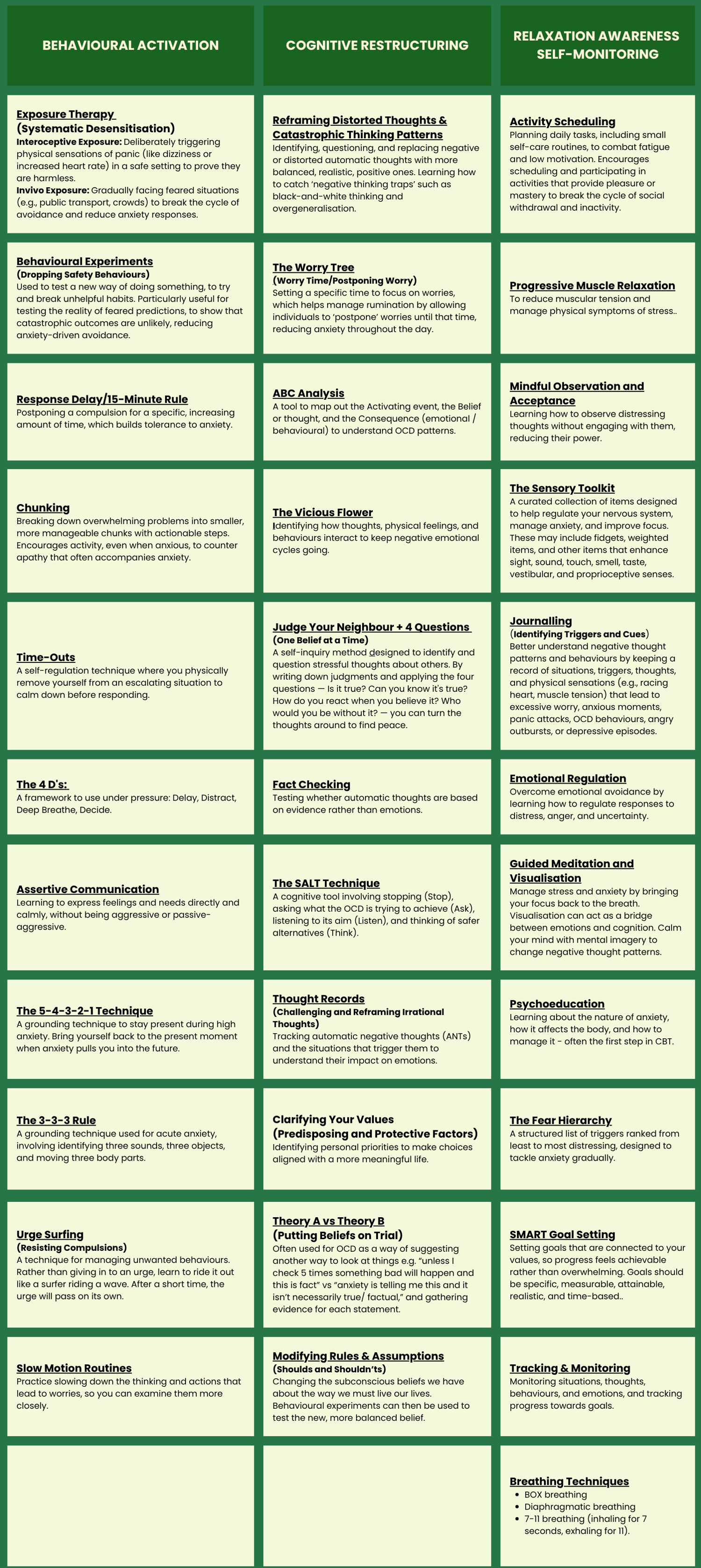
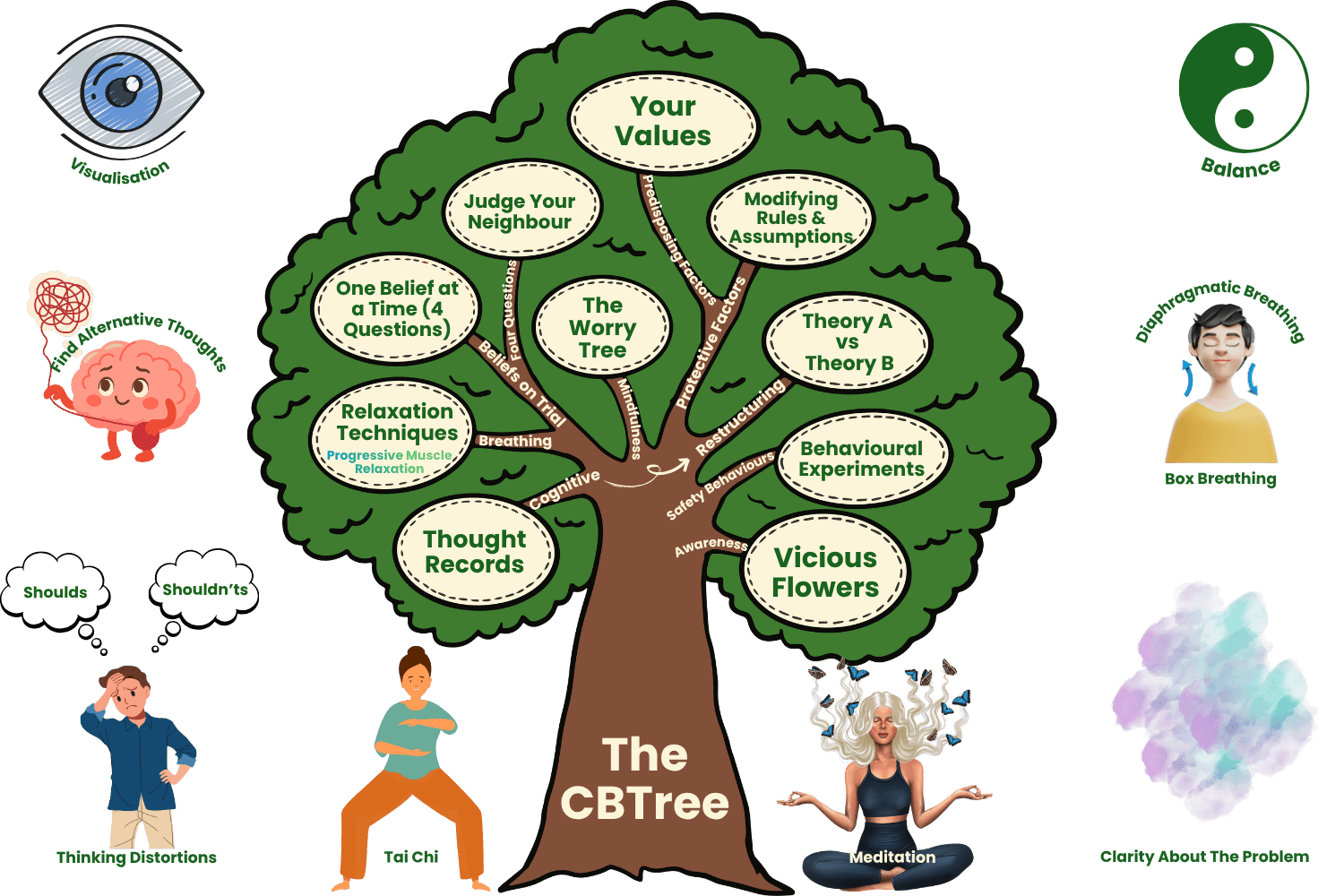
Since this revelation became clear to me, I have taken steps to organise the resources that are the most useful for me personally into a kind of CBT toolbox. I also created an at-a-glance diagram of all the tools I use most often. I'm calling it 'The CBTree.'
I now know exactly what to do, and where to find the tool I need, within seconds of a new situation occurring. This gives intervention techniques a fighting chance to make a big difference when it comes to reacting to unexpected crises, recognising the onset of depression, staving off a panic attack, or catching myself about to perform or engage with unhelpful OCD behaviours.
I believe that anybody embarking on CBT therapy should put together and fine-tune their own toolbox, tailored to their own specific emotional difficulties, behavioural tendencies, and personal mental health struggles. And this is particularly true of those who struggle with their memory, as I do.
Anyway, I hope you find these diagrams helpful and that you are able to use them to find exactly what you need when you need it.
Core Cognitive and Behavioural Interventions

The Depression Toolkit
CBT for depression is a structured, goal-oriented therapy (often 45-60 min sessions) that focuses on identifying and changing negative thought patterns and behaviours to improve mood.
Key interventions include behavioural activation (scheduling activities), cognitive restructuring (challenging irrational thoughts), problem-solving, and building skills for coping with stress.
The Anxiety Toolkit
CBT interventions for anxiety are highly effective, evidence-based approaches aimed at modifying distorted thought patterns and behaviours that fuel anxiety.
The OCD Toolkit
Cognitive Behavioral Therapy (CBT) for OCD focuses on breaking the cycle of obsession and compulsion, primarily through Exposure and Response Prevention (ERP).
Other core CBT tools for OCD include: developing a fear hierarchy (ranking anxiety-provoking situations), resisting compulsions, cognitive restructuring (challenging irrational thoughts), and mindfulness.
The Worry Toolkit
CBT techniques for worrying focus on identifying, challenging, and managing anxious thoughts through structured methods like scheduling 'worry time,' cognitive restructuring, and behavioural experiments.
Key techniques include journaling worries, differentiating between solvable and hypothetical problems, and using grounding exercises to manage anxiety in the moment.
The Panic Attack Toolkit
CBT tools for panic focus on breaking the cycle of panic by changing thought patterns and behaviors, typically involving psychoeducation, cognitive restructuring, exposure therapy, and breathing techniques.
Effective self-help tools include keeping a Panic Diary to track symptoms, completing a fear hierarchy, and practicing grounding exercises.
The Anger Management Toolkit
CBT anger management techniques focus on identifying triggers, challenging irrational thoughts, and developing healthier behavioural responses to emotional spikes.
Key methods include cognitive restructuring (reframing negative thoughts), deep breathing, time-outs, assertive communication, and progressive muscle relaxation. These strategies help individuals create a "buffer" between feeling anger and reacting to it.
Therapeutic Toolkit Descriptors