


Predisposing & Protective Factors
Cognitive Behavioural Therapy
This worksheet is used in CBT and Schema Therapy to create a balanced, compassionate picture of your psychological development. By mapping both the factors that have made you more vulnerable to difficulties alongside those that protect and support you, you and your therapist can build a more complete formulation — one that acknowledges both challenge and strength.
⚠️ Predisposing Factors
Identify the biological, social, and psychological factors that have made you more vulnerable to difficulties over time
🛡️ Protective Factors
Recognise the strengths, resources, and positive beliefs that have protected and supported you
⚖️ Balance
Holding both perspectives together creates a more complete, compassionate picture of your psychological history
🌱 Growth
Understanding what shaped you — and what helps you — guides more meaningful, targeted therapeutic work
How to Use This Worksheet
Work through each section with your therapist, completing both the predisposing (left) and protective (right) columns. The predisposing column explores factors that have made you more vulnerable. The protective column explores factors that have supported, strengthened, and protected you. Holding both together creates a balanced, honest formulation.
1
Developmental History
Reflect on significant early life experiences, relationships, and events that have shaped you. The predisposing column captures what made things harder; the protective column captures what helped or shielded you during that time.
2
Core Beliefs
Identify the fundamental beliefs about yourself, others, and the world that emerged from your history. Predisposing beliefs tend to be self-critical or catastrophising; protective beliefs are more compassionate and balanced.
3
Underlying Assumptions
Explore the conditional rules — often "if...then" statements — that govern your behaviour. For example: "If I am not perfect, then I will be rejected." The protective column captures healthier, more flexible alternatives.
4
Strategies
Record the coping behaviours and approaches that have developed from your beliefs and assumptions. Predisposing strategies tend to maintain problems; protective strategies are more adaptive and helpful.
5
Current Experience
Map how these factors play out right now — in thoughts, emotions, behaviour, and body sensations. The predisposing column reflects the current problematic experience; the protective column reflects the healthier alternative you are working towards.
💡 Remember: This worksheet is completed collaboratively with your therapist. It is not a test — it is a tool for building shared understanding. Both columns matter equally: the predisposing column helps explain why you struggle; the protective column reminds you of what is already working in your favour.
My Predisposing & Protective Factors
Complete This Section With Your Therapist
Work through each section in order, completing both columns. Take your time — this formulation will deepen and evolve as your therapy progresses.
⚠️ Predisposing Factors
🛡️ Protective Factors
Developmental History
Core Beliefs
Underlying Assumptions
Strategies
▼
Current Experience
Thoughts
Emotions
Behaviour
Body Sensations
Thoughts
Emotions
Behaviour
Body Sensations
🌿 Remember: A formulation is a working hypothesis — not a final verdict. Both columns matter equally: the predisposing column helps explain why you struggle, while the protective column reminds you of what is already working in your favour. This balance is the foundation for compassionate, effective change.
Where should we send your worksheet?
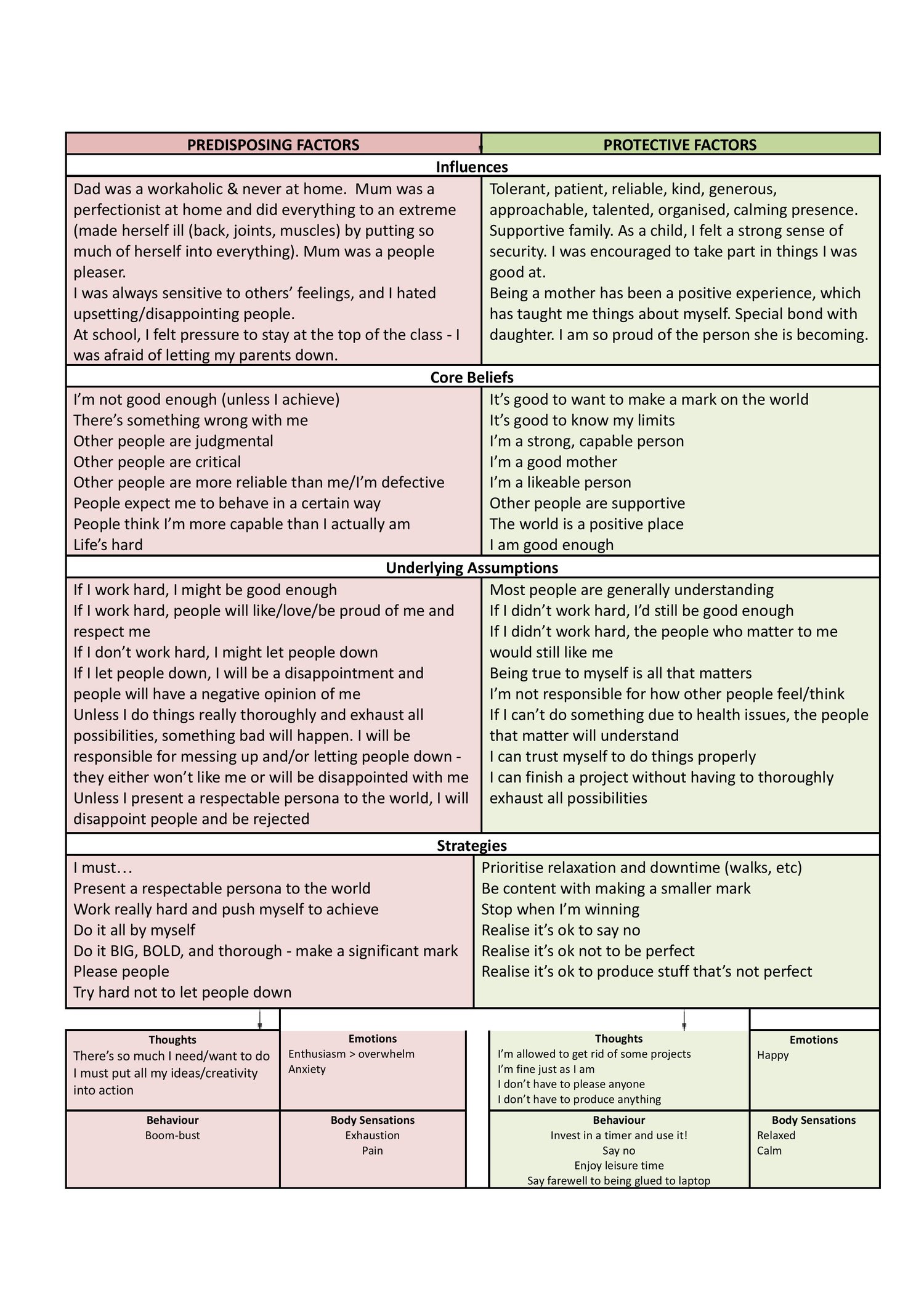
Example
A completed example showing the childhood influences, core beliefs, underlying assumptions, and coping strategies adopted by someone whose anxiety and depression is exacerbated through people-pleasing, perfectionism, and burnout.