

What is Journalling?
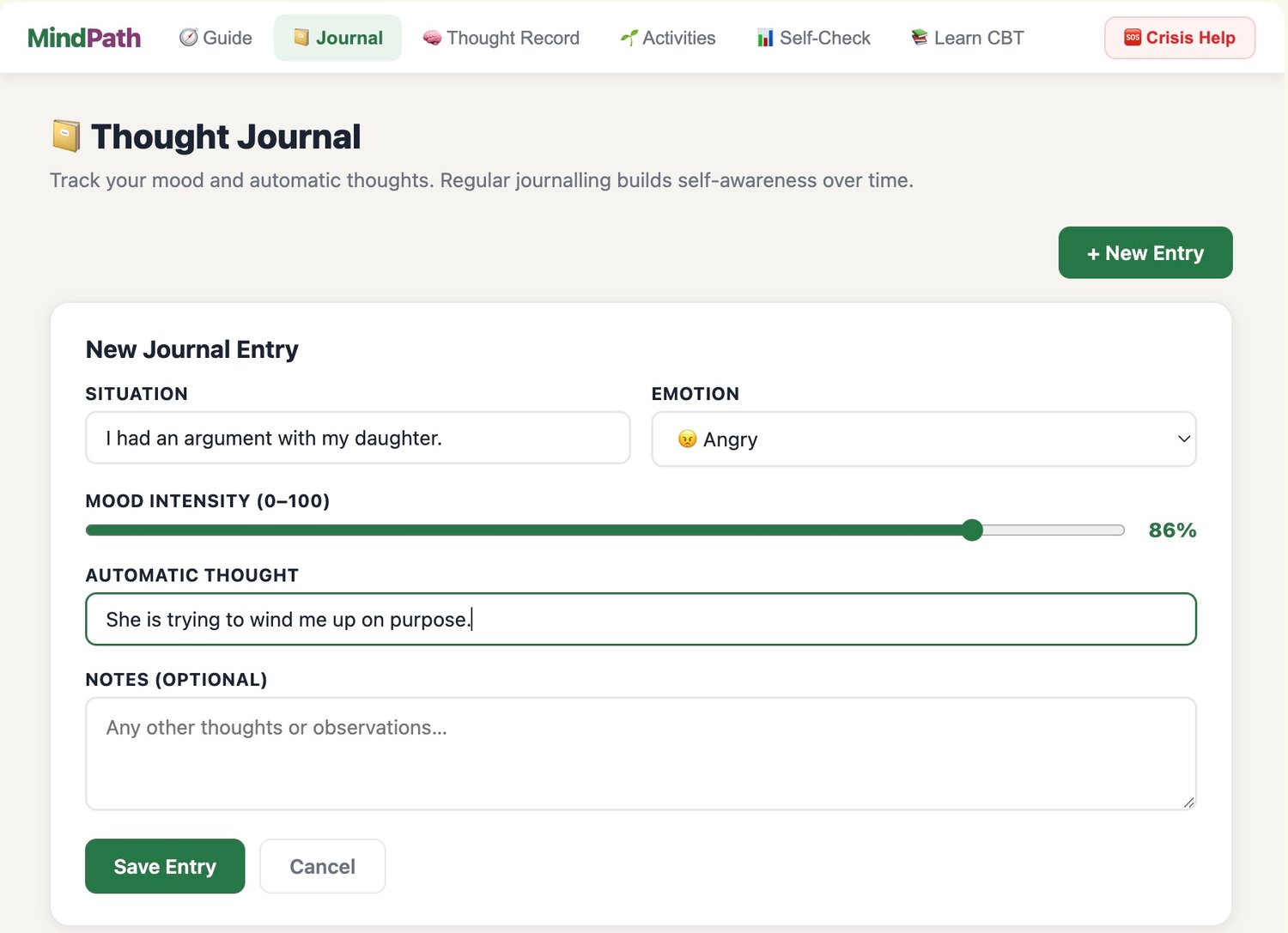
CBT journalling is a structured, self-help technique, designed to identify and challenge negative thought patterns and behaviours. By documenting situations, thoughts, and emotions, you can gain insight into cognitive distortions and build emotional resilience.
Key Elements of a CBT Journal
- Identify Negative Thoughts: Focus on capturing, "What was going through my mind in that moment?"
- Analyse Feelings and Behaviours: Note emotions (e.g., anxiety, sadness) and actions (e.g. hiding away, snapping at someone).
- Challenge Distortions: Actively look for evidence for and against your thoughts to break negative cycles.

How to Start a CBT Journal
- Select a Tool: Use a notebook, a computer document, or a CBT app (like MindPath).
- Be Consistent: Start with 10 minutes daily; consistency is more important than duration.
- Practice Gratitude: Include a gratitude section to help build emotional resilience.
Example 4-Step Entry
Try to include these four steps in every journal entry.
- Event: What happened?
- Thoughts: What did I think?
- Emotions: What did I feel?
- Behaviour: What did I do?
Potential Benefits
- Reduced Anxiety and Stress: Journalling can help lower stress and manage anxiety.
- Improved Mood: It encourages thinking more positively and can boost ‘happy hormones’ (dopamine and serotonin).
- Better Self-Awareness: It helps you better understand your mind.