Formulation Sheet
Cognitive Behavioural Therapy
A CBT Formulation Sheet is a structured tool that helps map out how your background, early experiences, and current stressors connect to the difficulties you are facing today. Working through this sheet — ideally with your therapist — builds a shared understanding of your problems and points towards a clear way forward.
🔗 Connect
Understand the links between your past experiences, early beliefs, and present-day difficulties
🧩 Understand
Make sense of why you developed certain patterns and how they continue to affect you today
🎯 Focus
Identify the maintaining factors keeping your difficulties in place — and where to intervene
🌿 Move Forward
Draw on your assets and strengths to chart a meaningful, realistic path towards change
How to Use This Sheet
Work through each section in order, from top to bottom. This formulation is not a fixed diagnosis — it is a working map that can be updated as your understanding deepens. Complete it honestly, and discuss it with your therapist to refine it over time.
1
Background Factors
Consider the biological (e.g. genetics, health), social (e.g. family environment, culture), and psychological (e.g. early trauma, significant relationships) factors and early life experiences that have shaped who you are and how you see the world.
2
Early Coping Style
Think about how you responded to your early experiences. What core beliefs did you develop about yourself, others, and the world? What assumptions did you form? How were these reflected in your behaviour, emotions, and physical responses?
3
Recent Stresses / Triggers
What recent events, situations, or changes have activated or worsened your difficulties? These might be life events, relationship changes, health issues, or work pressures that have brought old patterns to the surface.
4
Recent Maintaining Factors
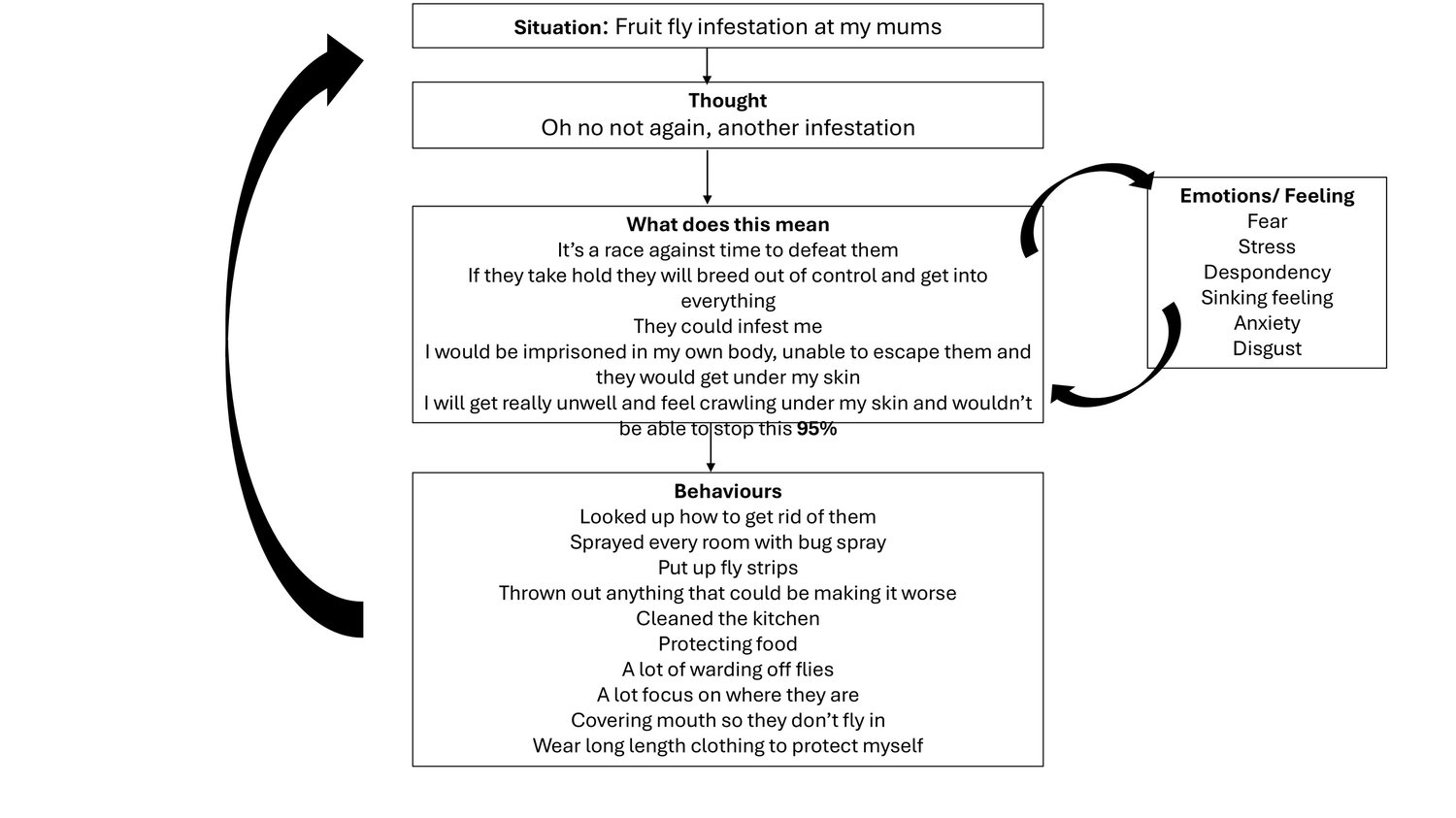
What is keeping your difficulties going right now? Record the physical sensations, emotions, thoughts, and behaviours that form a self-reinforcing cycle. These are the key targets for change in CBT.
5
Assets
What personal strengths, skills, values, relationships, and resources do you have? Assets might include resilience, creativity, supportive relationships, problem-solving ability, or previous experience of overcoming difficulties.
6
Way Forward
Based on everything above, what specific steps, goals, or changes might help? This is where your formulation becomes a plan — grounded in your own understanding of how your difficulties developed and what might shift them.
💡 Remember: A formulation is a hypothesis, not a verdict. It is a shared attempt to make sense of your experiences — not a fixed label. It will evolve as you and your therapist learn more. Treat it with curiosity rather than judgement.
My Formulation
Complete This Section With Your Therapist
Work through each section in order. There are no right or wrong answers — this is a personal map of your experiences that will develop and evolve over time.
Background Factors
Biological, social, psychological, early experiences — what has shaped who you are and how you see the world?
▼
Early Coping Style
Core beliefs, assumptions, behaviour, emotions, physiological reactions — how did you respond to your early experiences?
▼
Recent Stresses / Triggers
What recent events or situations have activated or worsened your difficulties?
▼
Recent Maintaining Factors
What is keeping your difficulties going right now? Complete each of the four areas below.
Physical / Bodily Sensations
Emotions
Thoughts
Behaviour
▼
Assets
What strengths, skills, support systems, and resources do you have to draw on?
→
Way Forward
Based on your formulation, what specific steps or goals might help?
🌿 Remember: A formulation is a working hypothesis — not a fixed diagnosis. It is a shared attempt to make sense of your experiences with curiosity and compassion. It will grow and change as you do. Well done for taking the time to understand yourself more deeply.
Where should we send your formulation?